
July 23, 2026
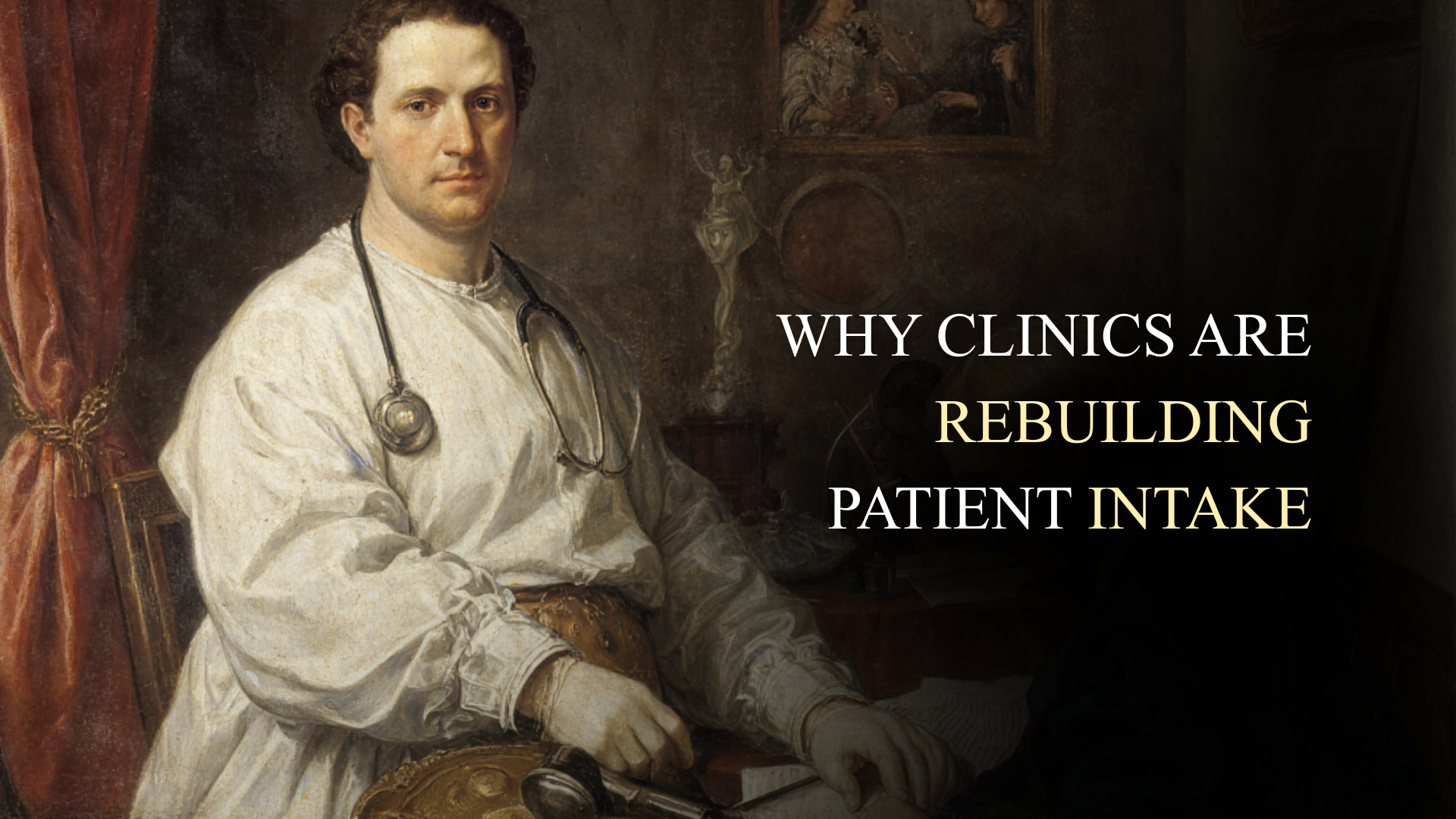
The Real Cost of the Waiting Room: Why Clinics Are Rebuilding Patient Intake
Ask most clinic owners where they're losing money, and they'll point to insurance reimbursement rates or staffing costs. Few point to the front desk. But the data says that's exactly where a huge share of preventable revenue is disappearing — in the gap between a patient trying to reach the clinic and actually being seen.
The Problem, in Numbers
- The average medical group misses 42% of incoming calls during business hours. Every missed call is a patient who might book with someone else — or simply give up (Prosper AI, 2026).
- U.S. patient no-shows cost the healthcare system an estimated $150 billion a year. No-show rates run 15–30% across outpatient clinics, climbing past 30% in specialties like pediatrics, dermatology, and sleep medicine (Perspective AI, 2026).
- For a solo practitioner, that translates to roughly $100,000–$190,000 in lost revenue every year. For a five-provider group, losses can exceed $750,000 (Neuwark, 2026).
- Practices spend over 8 hours a week just chasing down missing intake information — insurance details, incomplete forms, illegible handwriting re-typed by staff (GetProsper, 2026).
None of this is a clinical problem. It's an administrative one — and it's happening before the patient ever sits down with a provider.
Why It Happens
The typical patient journey still runs through friction that was designed for a slower era:
- A patient calls during a busy stretch, gets voicemail, and tries the next clinic on their list
- A new patient fills out a paper form in the waiting room, leaves fields blank, and hands it to a staff member who has to re-key it into the system — often chasing down what's missing after the fact
- A reminder text goes out the same way to every patient, regardless of why they might actually miss the appointment
- By the time a chart is "ready," the visit is already running late — and the queue behind it grows
Each of these steps feels small individually. Together, they're the reason a clinic can have a full schedule and still be losing revenue.
What AI Patient Intake Actually Fixes
Done properly, this isn't a chatbot bolted onto a booking page — it's a redesign of the whole first-contact experience:
- Answers and books 24/7, including evenings and weekends, instead of losing calls to voicemail
- Replaces the clipboard with a conversation patients complete on their own phone before they arrive — in their own language, without repeating history they've already given
- Predicts no-show risk by analyzing appointment history, lead time, and patient patterns, and intervenes before the slot is lost — not just a generic reminder sent to everyone the same way
- Writes directly into the EHR, so front-desk staff aren't re-typing what a patient already provided
Clinics using conversational digital intake report saving 500+ hours of front-desk and medical-assistant time per provider, per year — and large systems have attributed well over 100,000 saved staff hours annually at scale (Perspective AI, 2026).
The Revenue Case
- Clinics that adopt conversational AI for patient engagement report no-show reductions of 25–38%, reclaiming hundreds of thousands of dollars in appointments that would otherwise go empty (Neuwark, 2026).
- Practices running no-show rates under 10% — well below the 18–30% specialty average — aren't just sending better reminders. They've restructured how a patient moves from referral to waiting room, from first contact through outreach, self-scheduling, and follow-up (Linear Health, 2026).
- For a mid-sized practice managing 40 no-shows a month at roughly $300 average revenue per visit, that gap alone represents about $144,000 a year — before counting the cost of idle staff time and disrupted scheduling (Linear Health, 2026).
Where This Needs Care, Not Just a Tool
Healthcare is not a generic vertical, and generic automation tools tend to show it:
- Intake automation has to be HIPAA-aware by design, not retrofitted after the fact
- The system needs to integrate with the clinic's actual EHR, not create a second, disconnected record
- No-show prediction and outreach only work if they account for why a specific patient population misses appointments — a pediatric clinic, a sleep clinic, and a behavioral health group all face different friction, and a one-size-fits-all reminder script misses most of it
This is the layer where an off-the-shelf chatbot and a properly designed intake system diverge — and where it's worth having the workflow built around your clinic's actual patient population and specialty, not a generic template.
The Bottom Line
The patient is already trying to reach you. The only question is whether the first contact — the call, the form, the reminder — makes it easy for them to actually show up, or quietly pushes them toward the next clinic on their list. In 2026, closing that gap is one of the most measurable, fastest-paying-back changes a practice can make.
Sources: AI Patient Engagement in 2026, Neuwark · Digital Patient Intake in 2026, Perspective AI · AI Scheduling for Clinics: 10 Best Tools for 2026, Prosper AI · AI Patient Scheduling and Outreach, Linear Health · AI Agent Demo: New Patient Intake Scheduling Guide, GetProsper